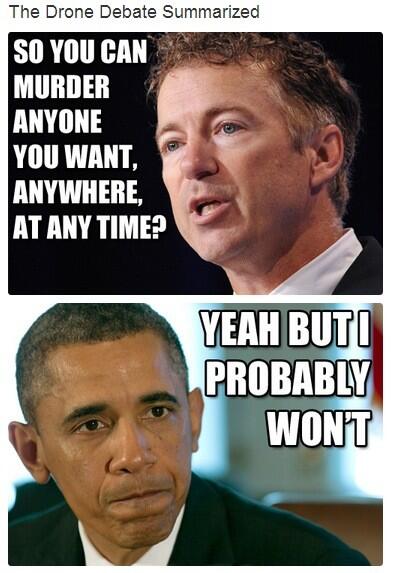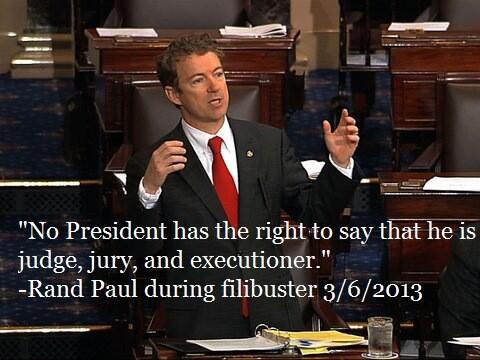
The US is still fighting “a war of self-defense against an enemy that attacked us on September 11, 2001. Our domestic statute, the 2001 Authorization for the Use of Military Force (AUMF), informed by the principles of the laws of war, is the basis for our detention authority and the use of force, including our lethal targeting of individuals. Not only has Congress shown no interest in reining in the executive and invoking the War Powers Resolution, it has expanded the scope of the AUMF in the National Defense Authorization Act of 2012 by broadening the definition of the enemy beyond those responsible for 9/11 – now the vaguely defined “associates” of Al Qaeda who had nothing to do with 9/11 can also be targeted for indefinite detention and death.
Targeting individuals for death by drone even if they are far from a battlefield is legal under international law because we carefully consider “the imminence of the threat” as well as the “sovereignty of the other states involved,” and because we limit our attacks to military objectives in our war of self-defense and prohibit attacks that are expected to cause incidental loss of civilian life. “US targeting practices, including lethal operations conducted with the use of unmanned aerial vehicles, comply with all applicable law, including the laws of war procedures….our practices for identifying lawful targets are extremely robust…
There is a different set of laws relating to drone strikes on civilians outside of internationally recognized war zones - they come under human rights law. The standards that make up human rights law stipulate that outside of armed conflict, lethal force is a law enforcement matter that may only be used in self-defense or when strictly necessary to prevent imminent harm to life and when an arrest cannot be undertaken.