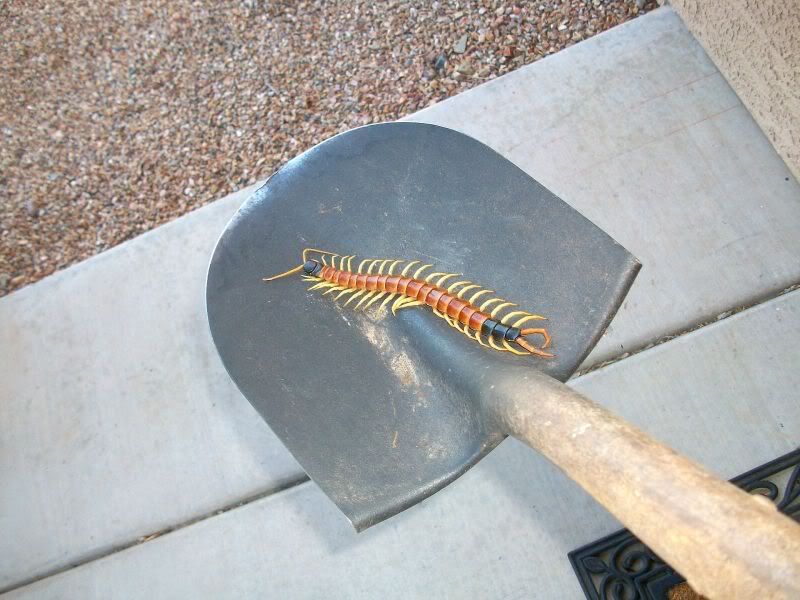
I have House Centipedes in my house, as well. They were almost non-existent in the winter months, but I've seen about 1 every week or two since the beginning of March. Last year I went around the exterior walls of my house and sprayed Sevin (
http://www.gardentech.com/sevin.asp) at the base, and it seemed to help some.
One thing I think is alarming about them is the following from the Wikipedia article, which a friend with the same insect problem also heard from an exterminator:
"In a laboratory experiment of 24 house centipedes, an average of 63 and a maximum of 151 eggs were laid."
Every 3 months or so, your house centipede population can multiply by 63. Every one you see, you MUST KILL! My friend's problem was much worse than mine, as he and his children would crunch hundreds under their feet while walking from their patio door to their outdoor pool, since they were all over the ground outside the house.
http://en.wikipedia.org/wiki/Scutigera_coleoptrata
My house is surrounded by landscaping rocks (normal-sized stones/rocks, not slabs) instead of mulch, and I guess that keeps the ground cooler and holds in moisture more than mulch, and that is why my house has been a place the little guys like to call "home".
Outdoors, house centipedes prefer to live in cool, damp places. Centipede respiratory systems do not provide any mechanism for shutting the spiracles. That is why they need an environment that protects them from dehydration and excessive cold. Most live outside, primarily under large rocks, piles of wood and especially in compost piles. Within the home, these centipedes are found in almost any part of the house. Most commonly, they are encountered in basements, bathrooms and lavatories, which tend to be humid, but they can also be found in drier places like offices, bedrooms and dining rooms. The greatest likelihood of encountering them is in spring, when they come out because the weather gets warmer, and in autumn/fall, when the cooling weather forces them to find shelter in human habitats.